
Meta's New MovieGen AI: A Game-Changer for Video Creation

In the ever-evolving world of artificial intelligence (AI), Meta (formerly Facebook) has once again made headlines with its latest innovation, the MovieGen AI video generator. Announced in early October 2024, this tool is a bold leap into the future of content creation, enabling users to generate short-form video clips based on text prompts. Leveraging the growing power of generative AI technologies like OpenAI’s GPT models, MovieGen aims to offer users the ability to create videos that range from the realistic to the fantastical with little to no prior filmmaking skills. However, as with any significant technological breakthrough, it raises questions about the ethical implications and broader impacts on creativity, ownership, and the future of the entertainment industry.
What is MovieGen?
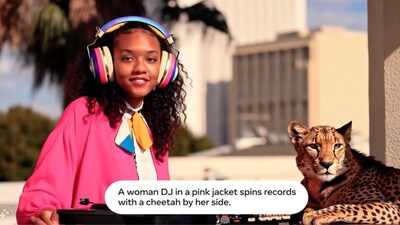
MovieGen is Meta’s latest foray into AI-driven creative tools, a development that mirrors the rapid advancements seen in text-to-image and text-to-video technologies. By inputting text prompts, users can generate short videos with varying degrees of complexity, from basic animations to more sophisticated, realistic scenes. This technology relies on deep learning models similar to those used in OpenAI's tools like GPT, where large datasets are processed to generate meaningful outputs.
According to Meta, MovieGen is positioned to democratise the video creation process, opening the doors to content creation for individuals who may not possess advanced technical skills or the resources traditionally needed to produce high-quality video. By reducing the barrier to entry, this tool could revolutionise not only personal video production but also areas such as advertising, marketing, and social media.
The potential applications are vast: content creators could generate storyboards or entire video concepts based on a simple text description, while businesses might use it to craft engaging promotional materials with minimal human input. Even educators could tap into this technology to create visually stimulating learning materials in a fraction of the time it currently takes.
The AI Arms Race
Meta is not alone in its pursuit of AI-driven video creation. The announcement of MovieGen comes on the heels of similar tools from OpenAI and other tech giants, all vying for dominance in the burgeoning field of generative AI. OpenAI has recently been in the spotlight with their advancements in AI models that generate both text and images from prompts. Meta, however, appears to be betting big on the future of video, which is predicted to dominate internet traffic and user engagement for years to come.
The technology behind MovieGen isn’t entirely new, but Meta’s integration of various AI models to streamline the process represents a significant leap. With these models, users can expect a level of detail and sophistication in video generation that was previously unattainable without large teams of artists, animators, and editors.
This AI arms race is only intensifying, and the development of tools like MovieGen signals that video content—already a massive part of the digital ecosystem—will become even more central to how we consume and create media. The prospect of AI-generated videos raises significant stakes not just for Meta, but for the entertainment and advertising industries at large.
Ethical and Creative Concerns
While the capabilities of MovieGen are undeniably impressive, they also bring up serious ethical questions. For one, the growing sophistication of AI video generators like MovieGen poses challenges in verifying the authenticity of visual content. As AI-generated images and videos become increasingly indistinguishable from real footage, the risks of deepfakes and misinformation grow.
Moreover, the arrival of AI-powered video tools may have unintended consequences for content creators and the creative industry. What happens to filmmakers, animators, and other video professionals if AI can replicate their work with a simple text prompt? While MovieGen promises to democratise video production, some argue that it could devalue human creativity, flooding the market with AI-generated content that lacks the nuance, vision, and artistic integrity that comes from human ingenuity.
Additionally, questions surrounding ownership and copyright come into play. If a user inputs a prompt into MovieGen and generates a video, who owns that video? Is it the user, Meta, or the AI model that created the output? The complexities surrounding intellectual property (IP) in generative AI have already sparked debates in the realms of text and image creation, and now, the video sector may face the same challenges.
Impact on Industries and Future Developments
Despite the potential downsides, it’s clear that AI video generation tools like MovieGen are here to stay. The impact on industries that rely heavily on video content—such as advertising, social media, and entertainment—will be profound. In marketing, for instance, companies could use AI-generated videos to produce tailored advertisements for different demographics at an unprecedented scale and speed. Social media influencers and content creators could pump out videos faster than ever, possibly leading to a saturation of video content online.
In the film and television industry, MovieGen could provide a helpful tool for pre-production processes such as storyboarding, visual effects testing, and even scriptwriting. However, there is also concern that AI could encroach further into these industries, potentially reducing the need for human talent in areas like post-production editing or even acting, as AI models become capable of generating lifelike human characters.
As AI continues to improve, we could see even longer and more complex video productions being generated entirely by machine learning models. In the future, entire short films, commercials, or educational videos could be crafted with minimal human oversight, changing the way we think about video content and creativity.
The Road Ahead
While Meta’s MovieGen AI video generator represents a significant technological leap, it also raises numerous questions about the future of content creation. On the one hand, it offers incredible possibilities for democratizing video production, allowing anyone with a simple idea to turn it into a visual reality. On the other hand, it prompts a deep reflection on the value of human creativity, the ethical implications of deepfakes, and the future role of artists in a world increasingly dominated by AI.
As we move forward, society will need to grapple with these issues to ensure that AI technologies like MovieGen are used responsibly and creatively. While the tool itself may provide new opportunities for users, it also marks a pivotal moment in our relationship with AI and the creative process. The balance between innovation and ethical responsibility will define how tools like MovieGen shape the future of media.