
NASA Monitors Expanding 'Dent' in Earth's Magnetic Field
NASA has its eyes on a peculiar and growing anomaly within Earth's magnetic field, known as the South Atlantic Anomaly (SAA). This phenomenon is characterized by a significant reduction in magnetic intensity over the skies spanning from South America to southwest Africa.
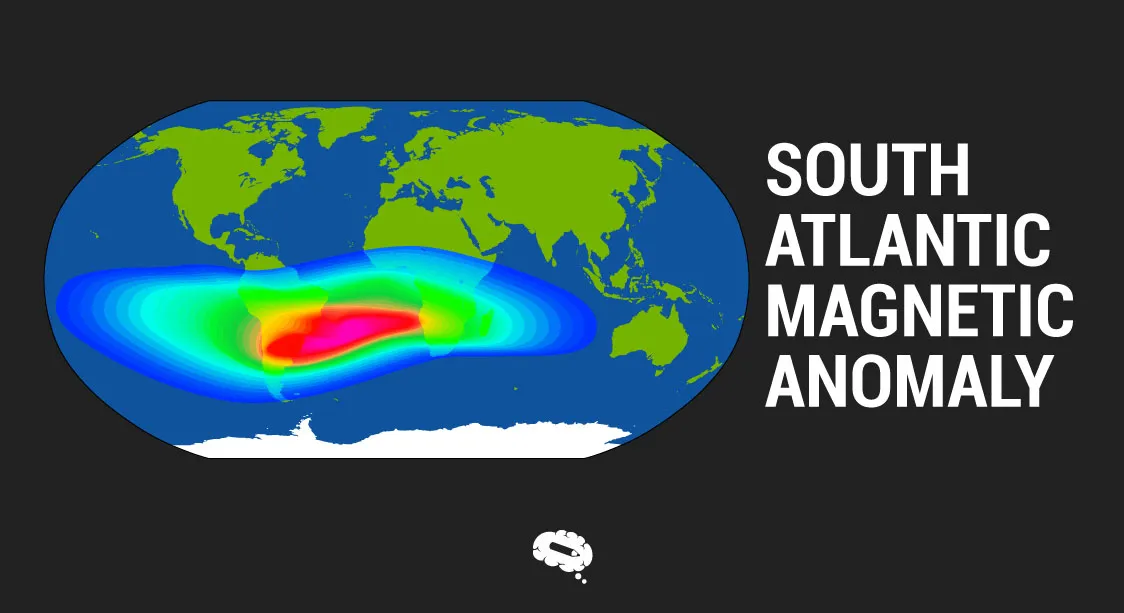
Described as a dent or a 'pothole in space,' the SAA doesn't pose a direct threat to life on Earth but is a major concern for orbiting spacecraft, including the International Space Station (ISS). The weakened magnetic field in this region allows charged particles from the Sun to penetrate closer to Earth than usual, potentially damaging satellite electronics and causing malfunctions. To mitigate this, spacecraft often power down or adjust their operations when traversing this area.
NASA's interest in the SAA goes beyond mere protection of space assets. It represents an opportunity to delve into complex geophysical phenomena. The anomaly's origins are linked to the dynamic, molten iron in Earth's outer core, which generates our planet's magnetic field. A significant contributor to the weakening of the field here is thought to be the African Large Low Shear Velocity Province, a vast reservoir of dense rock deep beneath the African continent.
Recent studies suggest that the SAA could be splitting into two separate zones, adding complexity to this already enigmatic feature. While there's no evidence that the SAA signals an impending flip of Earth's magnetic poles—an event that happens over hundreds of thousands of years—it does offer insights into the planet's deep interior and the magnetic field's behavior.
NASA continues to monitor the SAA through various missions, using satellites to gather data that helps in understanding, predicting, and preparing for changes in this magnetic anomaly. This research is crucial for safeguarding our technological infrastructure in space and for advancing our knowledge of Earth's geodynamo.
Tags:
Astronomy