
Discovery of DNA and RNA Building Blocks in Asteroid Bennu Samples
In a groundbreaking analysis, scientists have identified all five nucleobases—the essential components of DNA and RNA—in samples retrieved from asteroid Bennu by NASA's OSIRIS-REx mission.
NASA Goddard/CI Lab/Dan Gallagher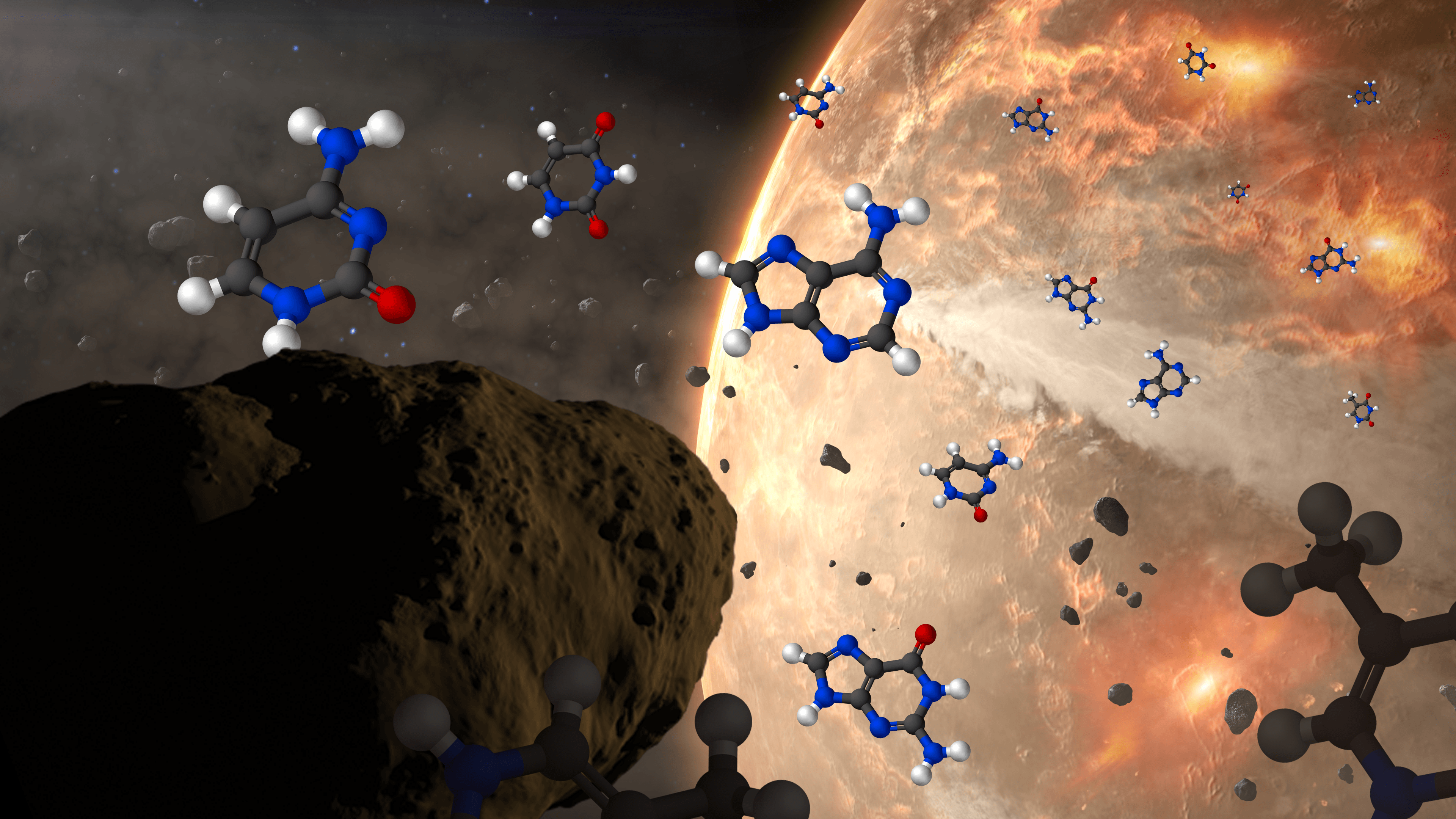
This discovery provides compelling evidence supporting the theory that asteroids may have delivered the fundamental ingredients necessary for life to Earth billions of years ago.
Background:
Asteroids are considered potential carriers of water and organic compounds to early Earth. However, studying meteorites that land on Earth is challenging due to contamination from the atmosphere and biosphere. Pristine samples collected directly from asteroids offer a clearer insight into their original composition. Prior to OSIRIS-REx, only Japan's Hayabusa and Hayabusa2 missions had successfully returned asteroid samples.
OSIRIS-REx Mission and Sample Analysis:
Launched by NASA, the OSIRIS-REx spacecraft collected approximately 121.6 grams of material from asteroid Bennu in September 2023, marking the largest asteroid sample return to date. An international team of researchers, led by Dr. Daniel Glavin and Dr. Jason Dworkin from NASA's Goddard Space Flight Center, conducted a comprehensive analysis of these samples. The findings, published in Nature Astronomy, revealed the presence of ammonia and nitrogen-rich organic matter. Notably, the Japanese collaborators detected all five nitrogenous bases: adenine, guanine, cytosine, thymine, and uracil. These molecules are crucial for the formation of DNA and RNA, suggesting that asteroids like Bennu could have been instrumental in delivering life's building blocks to early Earth.
Analytical Techniques:
To prevent terrestrial contamination, the Bennu samples were handled under nitrogen. A 17.75 mg portion was analyzed for nitrogen-containing organic molecules using high-resolution mass spectrometry at Kyushu University. The concentration of these compounds was found to be approximately 5 nmol/g, which is 5 to 10 times higher than levels previously reported from asteroid Ryugu samples. In addition to the five nucleobases, the researchers identified other significant compounds, including xanthine, hypoxanthine, and nicotinic acid (vitamin B₃).
Comparative Analysis:
The team also compared the Bennu samples to meteorites such as Murchison and Orgueil. They observed that the ratio of purines (adenine and guanine) to pyrimidines (cytosine, thymine, and uracil) was lower in the Bennu samples compared to these meteorites. This difference could be attributed to various factors, including differences in the parent bodies, formation pathways, or exposure to different cosmic environments.
Implications:
This discovery enhances our understanding of the role asteroids may have played in the origin of life on Earth. The presence of all five nucleobases in Bennu samples provides direct evidence that these essential components for life can form in space and potentially be delivered to planetary surfaces. Further studies are necessary to explore the chemical processes that led to the formation of these compounds and to assess their prevalence in other celestial bodies.
This research not only sheds light on the potential extraterrestrial origins of life's building blocks but also establishes a reference for reanalyzing other meteorites in collections worldwide, offering a broader perspective on the distribution of organic compounds in the solar system.