
New Discoveries of Mayan Ruins Through Space Archaeology

Recent advances in space archaeology have brought to light a fascinating array of undiscovered Mayan ruins, demonstrating once again the untapped potential of technology in revealing ancient history. Using satellite imaging and advanced remote sensing technologies, researchers have been able to peer beneath dense jungle canopies to uncover hidden structures, including temples, roads, and dwellings, that have been lost to time. The latest findings contribute to a growing understanding of the complexity and scale of Mayan civilisation, further solidifying its position as one of the most sophisticated ancient cultures in the Americas.
Cutting-Edge Technology in Space Archaeology
Space archaeology, a field that utilises satellite technology to survey and map archaeological sites from orbit, is at the forefront of these new discoveries. In the case of the Mayan ruins, Light Detection and Ranging (LiDAR) technology has played a pivotal role. LiDAR works by sending laser pulses to the Earth’s surface and measuring the time it takes for the light to return, enabling researchers to create highly detailed maps of the terrain, even through thick vegetation. This technique has proven invaluable in Central America’s rainforests, where the jungle obscures ancient sites from traditional ground-based exploration.
The advantage of space-based archaeology is its ability to cover large and inaccessible areas quickly and efficiently. While archaeologists have been studying Mayan sites for over a century, many parts of the jungle are still difficult to access, leaving large swathes of ancient civilisation hidden. With satellite technology, however, researchers can now identify potential excavation sites and explore vast areas that would otherwise take years to survey.
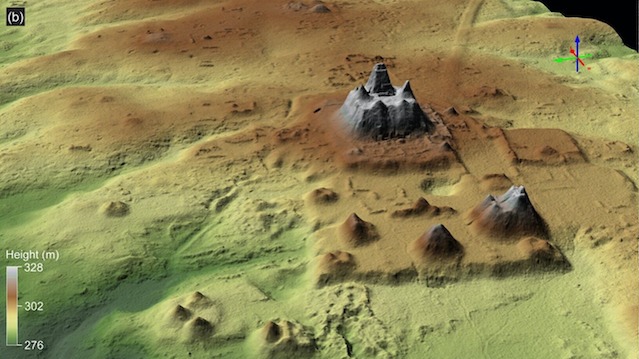
Discovery of Hidden Mayan Cities
One of the most significant findings from these new discoveries is the uncovering of previously unknown Mayan cities and settlements. The use of LiDAR has revealed an intricate network of roads, fortifications, and other infrastructure that suggests the existence of large urban centres that rival the more famous Mayan cities like Tikal and Chichen Itza. Some of these newly discovered sites appear to be connected by a vast web of “sacbeob,” or ancient Mayan roads, which were used for trade, transportation, and communication between city-states.
Researchers have also uncovered new details about agricultural practices, including vast terraced fields and irrigation systems that supported large populations. These discoveries further highlight the sophistication of the Mayans in managing their environment and resources, allowing them to thrive in what might otherwise have been a difficult landscape for large-scale civilisation.
Unveiling New Structures
In addition to the uncovering of new cities, researchers have also identified numerous previously unknown structures within already recognised Mayan sites. Hidden beneath layers of earth and vegetation, these buildings include temples, pyramids, and even ball courts. These finds provide archaeologists with a deeper understanding of the architectural styles, religious practices, and social structures of the Mayan civilisation.
One particularly intriguing discovery is the identification of large-scale structures that could have served ceremonial or governmental purposes. Some of these buildings rival the grandeur of well-known Mayan pyramids, such as the Pyramid of the Sun in Teotihuacan, although further excavation is needed to confirm their exact use and significance.

Rewriting Mayan History
These discoveries are helping to reshape scholars' understanding of Mayan civilisation. Long thought to be a collection of isolated city-states with little cohesion between them, the new findings suggest a far more interconnected society than previously believed. The extensive network of roads, bridges, and waterways indicates that these cities were part of a well-organised civilisation that engaged in extensive trade and communication across long distances.
Furthermore, the discovery of additional ceremonial centres and structures dedicated to religious practices sheds new light on the cultural and spiritual life of the Mayans. With evidence of larger and more complex cities than initially thought, researchers are rethinking the political and social hierarchies within Mayan society.
The Role of Technology in Preserving History
The success of space archaeology in revealing these hidden Mayan structures has important implications for the future of archaeology. Traditionally, excavation and exploration have been time-consuming, laborious processes that require significant resources. With the advent of satellite technology and remote sensing, archaeologists can now survey large areas quickly, allowing for the preservation of historical sites that might otherwise be at risk of destruction.
LiDAR, in particular, has proven to be a game-changer. It has not only uncovered Mayan ruins but has also been instrumental in revealing hidden Roman cities, ancient Egyptian structures, and even remnants of long-lost civilisations in Southeast Asia. The ability to peer through dense vegetation, buildings, and even modern urban areas makes LiDAR an invaluable tool for archaeologists working in challenging environments.
Moreover, the use of technology allows for a less invasive approach to archaeology. Traditional excavation methods can sometimes damage fragile sites, but satellite imaging provides detailed information without disturbing the land. This approach helps archaeologists better understand the scale and layout of ancient cities before any ground is broken, leading to more informed and careful excavation efforts.
Preserving Cultural Heritage
The discovery of these new Mayan ruins not only enhances our understanding of ancient civilisation but also underscores the importance of preserving cultural heritage. Many of the newly uncovered sites are located in regions threatened by deforestation, agricultural expansion, and urbanisation. By identifying these sites through satellite technology, archaeologists and governments can work together to protect them from potential destruction.
These findings also present an opportunity for tourism and education, as previously unknown sites could become important cultural landmarks. However, with increased tourism comes the need for careful management to ensure that these ancient structures are preserved for future generations.
Conclusion
The application of space archaeology to uncover hidden Mayan ruins is revolutionising our understanding of one of the most complex and mysterious civilisations in history. Through the use of satellite technology and LiDAR, archaeologists are peeling back the layers of time to reveal a more interconnected and sophisticated society than previously imagined. As this technology continues to develop, it is likely that even more secrets of the ancient world will be uncovered, allowing us to learn more about the history of human civilisation and the incredible feats of the people who came before us