
3D-Printed Earth: IAAC Unveils Sustainable Lightweight Building Prototype

Barcelona, Spain — The Institute for Advanced Architecture of Catalonia (IAAC) has unveiled a groundbreaking lightweight building prototype at its Forest Campus. Developed using 3D-printed earth, this innovative structure represents a significant step forward in sustainable architecture and building practices.
Revolutionising Construction with Earth
The IAAC team has embraced 3D printing to craft a building prototype that utilises locally sourced earth as its primary material. This approach is designed to reduce environmental impact, as earth is abundant, biodegradable, and requires minimal energy to process. The prototype demonstrates how advanced technology and traditional materials can combine to create structures that are not only functional but also environmentally friendly.
Design and Functionality
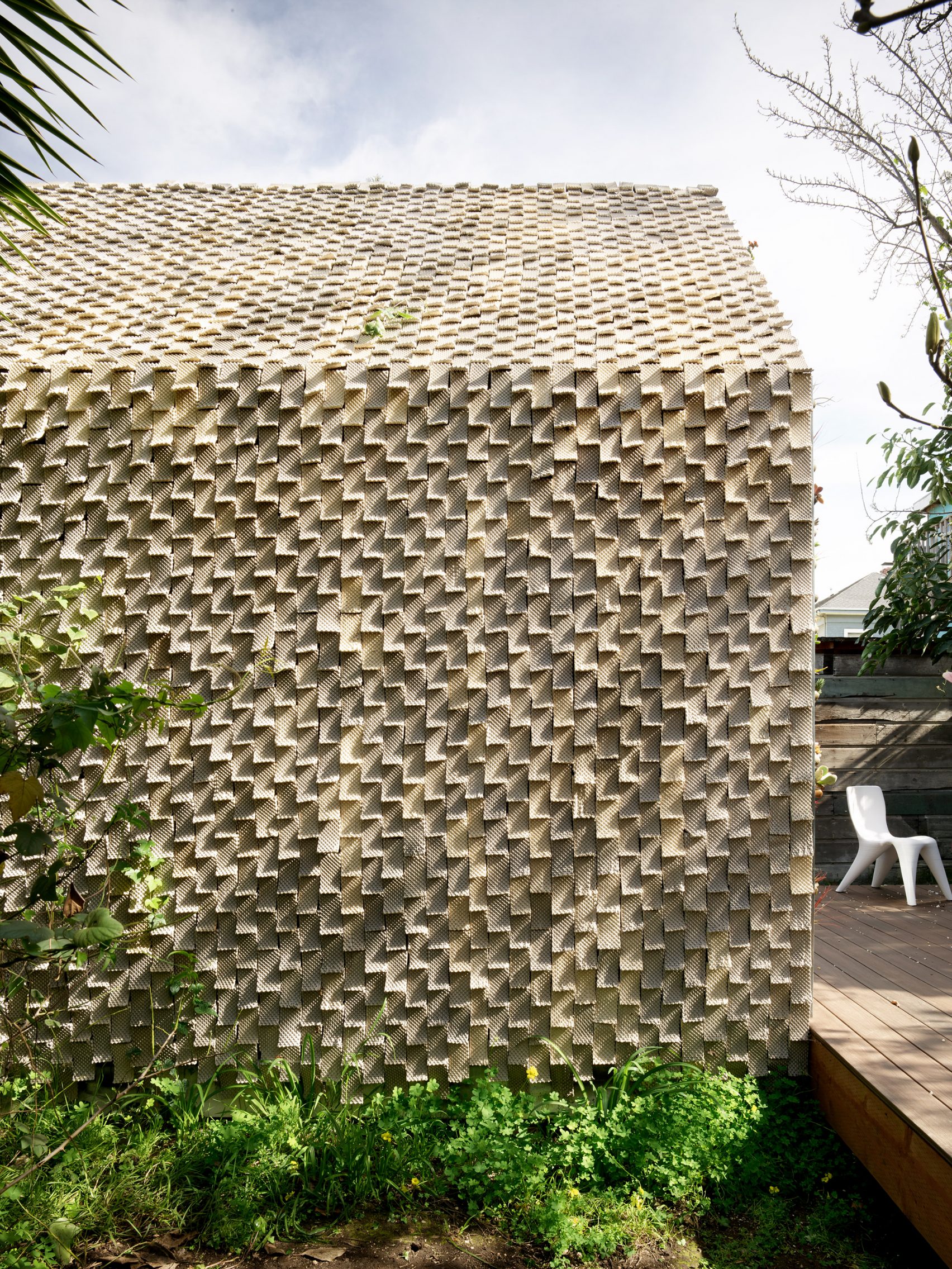
The lightweight prototype features a striking geometric design that highlights the versatility of 3D printing in architecture. The structure is engineered for thermal efficiency and durability while remaining cost-effective and adaptable. By using 3D printing, the IAAC team achieved precision in the design and reduced waste, making the construction process both efficient and sustainable.
A Model for the Future
This project is part of IAAC’s broader mission to explore innovative building solutions that address pressing global challenges such as urbanisation, resource depletion, and climate change. The use of earth as a primary material aligns with the principles of circular construction, ensuring that buildings can be recycled or returned to the environment at the end of their life cycle.
Global Implications
The lightweight building prototype is not just an academic exercise—it has the potential to revolutionise construction in regions with limited access to traditional building materials. By demonstrating how 3D printing can utilise local resources like earth, the IAAC project offers a scalable solution for creating affordable and sustainable housing worldwide.
What’s Next?
The IAAC plans to continue refining its 3D-printing techniques and exploring how this technology can be applied on a larger scale. The Forest Campus serves as both a testing ground and a showcase for these innovations, inspiring architects and engineers globally to rethink the way buildings are designed and constructed.
This project exemplifies how combining cutting-edge technology with sustainable practices can pave the way for a greener future in architecture and urban development.