
Eyelashes' Unique Structure Efficiently Deflects Water from Eyes
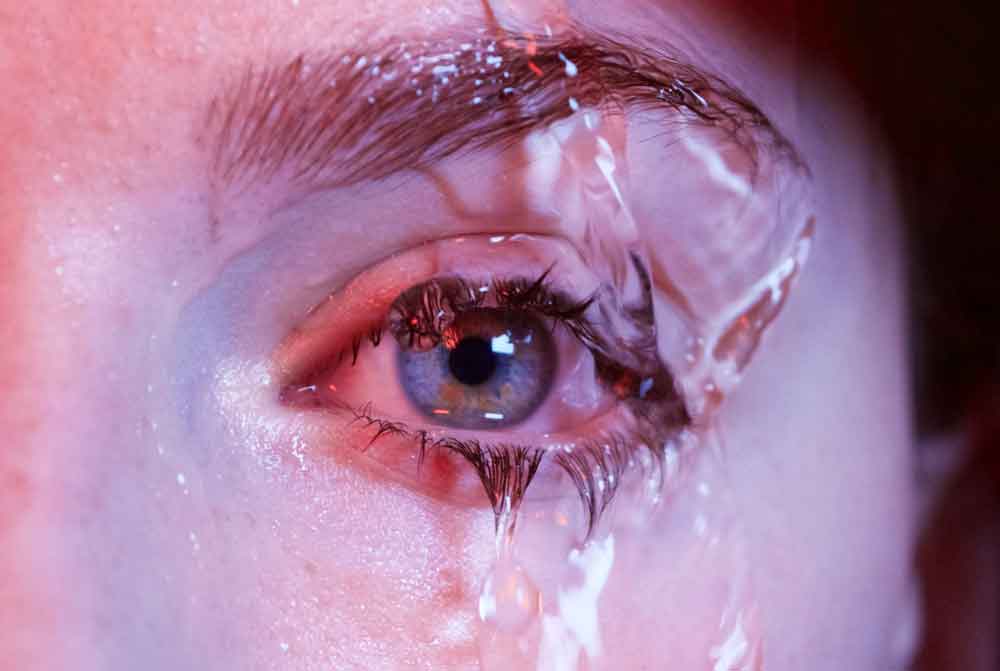
Recent research has unveiled that human eyelashes possess specialized features enabling them to effectively repel water, thereby safeguarding vision. A study conducted by the Technical Institute of Physics and Chemistry of the Chinese Academy of Sciences identified two primary characteristics contributing to this function: the microstructure of the lash surface and its distinctive curvature.
The external layer of an eyelash, known as the cuticle, functions as a "micro-ratchet." This structure comprises overlapping scales that permit water to flow smoothly from the base to the tip but resist movement in the reverse direction. Experiments involving detached human eyelashes demonstrated that more force was necessary to move water against this ratchet effect than with it. Additionally, the study revealed that eyelashes are inherently hydrophobic, causing water to bead up and roll off rather than adhering to the surface.
Beyond their surface properties, the shape of eyelashes plays a crucial role in water deflection. Eyelashes approximate a curve known as a brachistochrone, which minimizes the time it takes for a particle to travel between two points under gravity. Researchers created arrays of nylon fibers mimicking the dimensions and elasticity of human eyelashes, comparing brachistochrone-shaped fibers to those that were straight or differently curved. Results indicated that water droplets slid off most rapidly from fibers shaped like a brachistochrone.
These findings highlight the evolutionary adaptation of eyelashes in protecting the eyes from moisture, which is essential for maintaining clear vision. While eyelashes are traditionally recognized for shielding against dust and debris, this study emphasizes their role in managing water exposure from various sources, including rain, sweat, and tears.
However, certain cosmetic practices may compromise these protective functions. The application of mascara can alter the hydrophobic nature of eyelashes, making them more prone to water retention. Similarly, mechanical alterations such as curling can change the optimal brachistochrone shape, potentially diminishing their efficiency in deflecting water.
In summary, the study provides valuable insights into the biomechanical properties of eyelashes, demonstrating how their unique surface microstructure and curvature work in tandem to protect the eyes by efficiently repelling water. These findings could inspire the design of biomimetic materials and devices that require efficient water management systems.