
Greece’s Seismic Swarm Getting More Mysterious
The ongoing seismic crisis in Greece has left scientists and residents alike searching for answers. With states of emergency declared on the islands of Santorini and Amorgos, the region has been rocked by a series of earthquakes and volcanic activity, creating a complex puzzle for researchers to solve. New data, however, is shedding light on the intricate interactions between tectonic forces and volcanic systems beneath the Aegean Sea.

Ground Deformation and Magma Movement
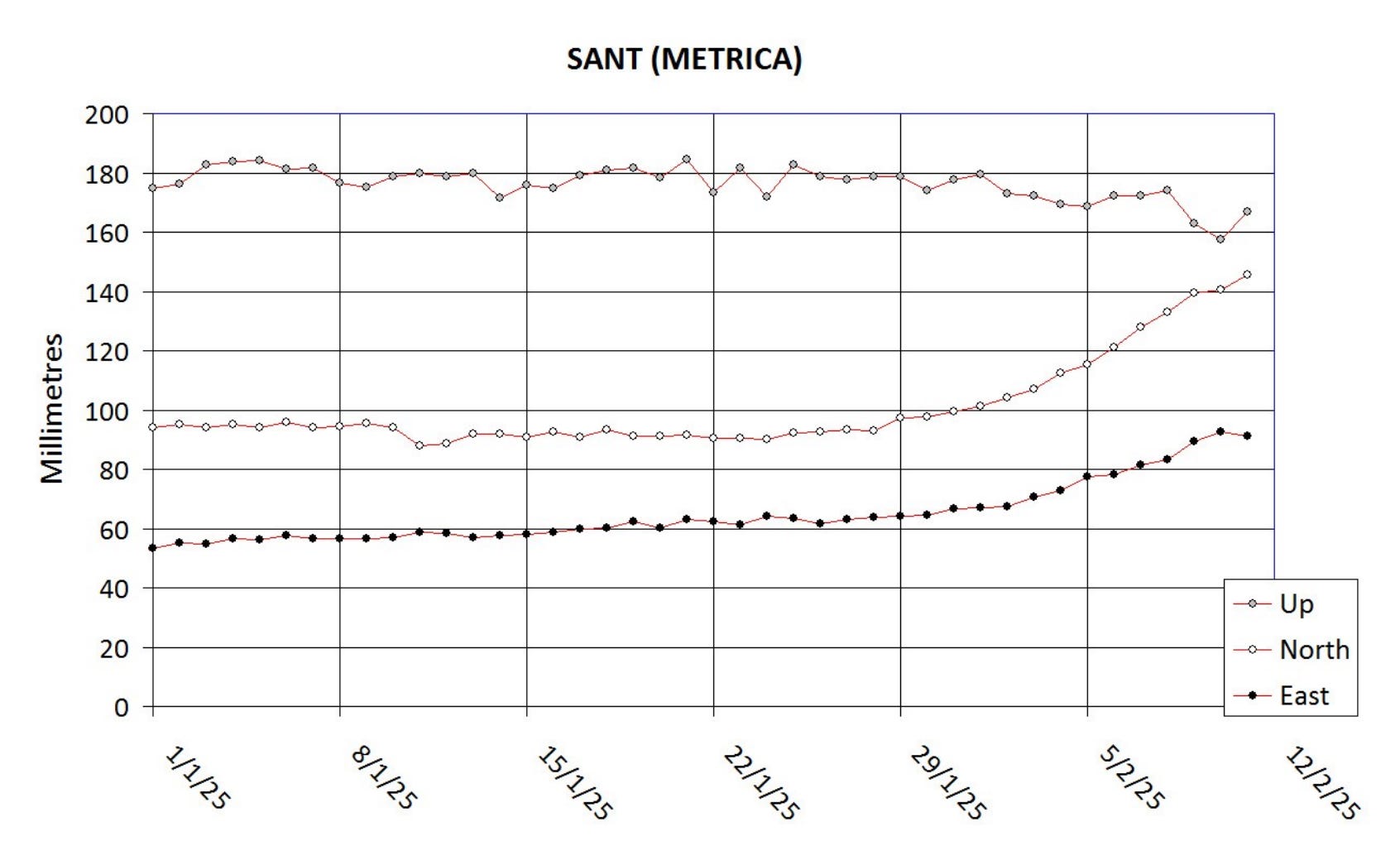
Recent GPS data from Santorini reveals significant ground deformation, pointing to the movement of magma beneath the island’s caldera. Since July 2024, GPS stations have recorded subtle shifts in the ground’s position, accelerating dramatically in late January 2025. This deformation aligns with the onset of a seismic swarm northeast of Santorini, suggesting a connection between magma movement and the earthquakes.
The data, analyzed by scientists like Pierre Briole of CNRS, France, indicates that magma is intruding into the shallow crust beneath Santorini, causing the ground to inflate. This process mirrors the volcanic crisis of 2011-2012, when similar activity was observed. However, the current situation is complicated by additional tectonic activity outside the caldera, which may be influencing the seismic swarm.
A High-Resolution Look at the Seismic Swarm
A new, high-resolution seismic catalog, developed by Dr. Marius Isken of GFZ Potsdam, provides unprecedented detail about the earthquake swarm. Using advanced techniques, the catalog reveals that the swarm is not a random cluster of events but is instead organized along coherent 3D surfaces, likely representing faults or magmatic dykes.
The swarm began in late January 2025, with earthquakes propagating northeastward from Santorini toward Amorgos. Early activity was concentrated in the lower crust, but as the swarm progressed, it activated shallow faults, producing larger magnitude earthquakes. This shift suggests that pressurized fluids, possibly driven by magma, are migrating through the crust and reducing stress on faults, allowing them to slip more easily.
A Three-Stage Crisis
Scientists propose that the seismic-volcanic crisis has unfolded in three stages:
- Magmatic Inflation (September 2024): Shallow magma movement beneath Santorini caused ground deformation and minor earthquakes, initially of little concern.
- Deep Intrusion (January 2025): A magmatic dyke intruded into the lower crust, triggering a deep seismic swarm northeast of Santorini. This activity coincided with accelerated ground deformation.
- Shallow Fault Activation (Late January 2025): Pressurized fluids migrated into shallow faults, producing larger earthquakes and dispersing the swarm across a broader area.
What’s Next?
While the immediate future remains uncertain, scientists are closely monitoring the situation. The deep seismic swarm near Santorini has subsided, but shallow activity continues. The possibility of a larger earthquake cannot be ruled out, though swarms like this rarely culminate in major events. Improved monitoring, including the establishment of a dedicated observatory for Santorini and Kolumbo, could provide critical insights into the region’s volcanic and tectonic systems.
This extraordinary sequence of events highlights the dynamic nature of the Aegean crust, where tectonic stretching and volcanic activity create a complex and ever-changing landscape. As researchers continue to analyze the data, the story of Greece’s seismic swarm will undoubtedly evolve, offering new insights into the forces shaping our planet.
*References: Briole, P., et al. (2025); Isken, M., et al. (2025); Hubbard, J., and Bradley, K. (2025).*
